
SC orders blanket ban on controversial NCERT book, a “deep conspiracy" to portray judiciary as corrupt
NCERT Judiciary Chapter: A chapter in the NCERT's 8th-grade social science textbook has sparked controversy, prompting it to be withdrawn. This chapter discussed corruption in the judiciary

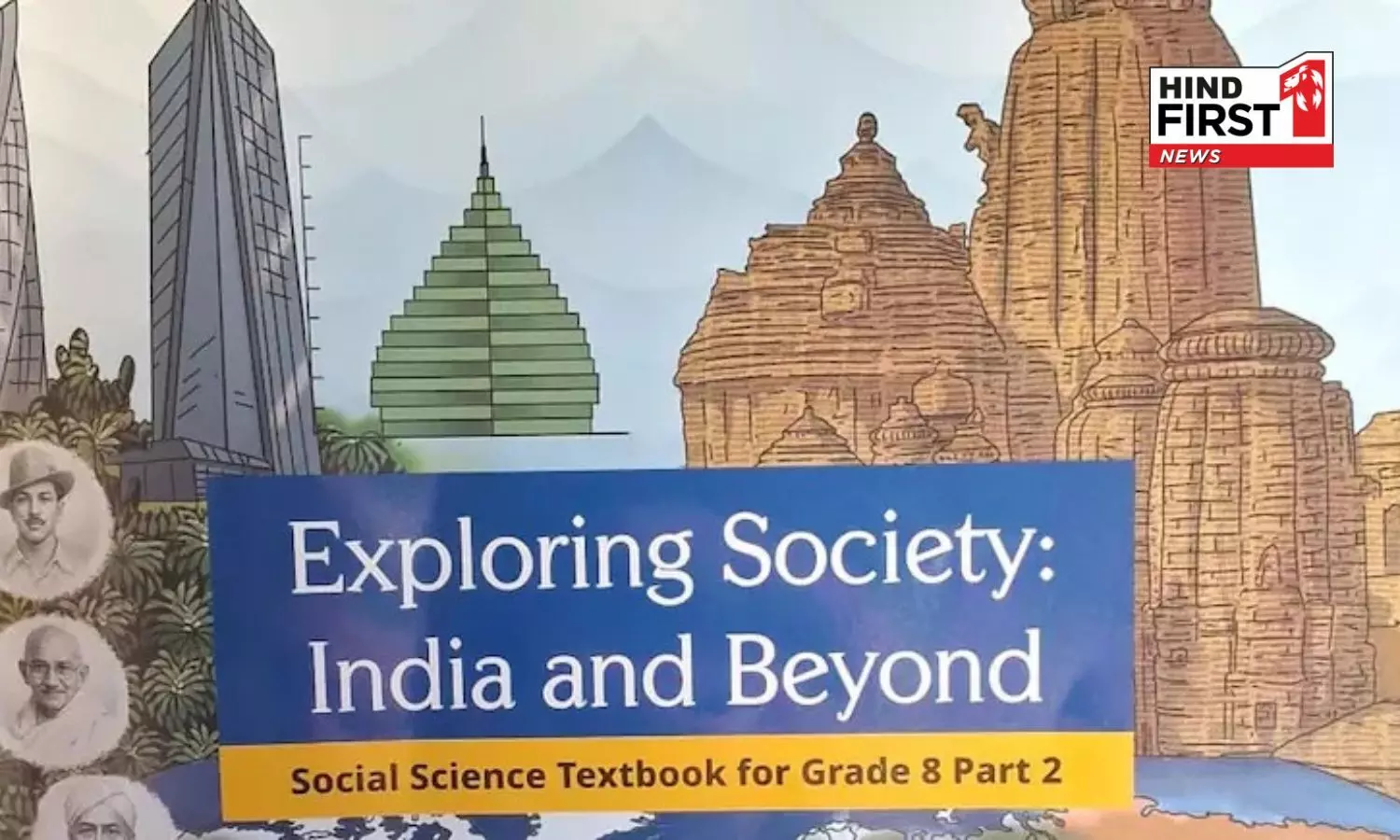
A three-judge bench headed by Chief Justice Surya Kant, hearing the case suo motu, stated that the "careless, irresponsible, motivated, and derogatory conduct and manner" of the written depiction was intended to create prejudice against the judiciary in the "sensitive minds" of young schoolchildren and, through them, to spread it to society and even future generations.
Chief Justice Surya Kant, stating that "those responsible will face action," ordered a "complete ban" on the Class 8 Social Science textbook; initiated contempt proceedings and issued show-cause notices to the NCERT Director and the Secretary of School Education.
The Supreme Court on Thursday (February 26, 2026) stated that there was a "deep conspiracy" behind the "well-planned move" to portray the judiciary as a corrupt institution in the Class 8 social science textbook.
What is NCERT?
NCERT, or National Council of Educational Research and Training, is an autonomous organization under the Ministry of Education. It was established in 1961. NCERT's job is to publish and revise the textbooks taught in CBSE schools. New chapters are added to the textbooks as needed, and some chapters are also removed.
What is the process of writing a textbook?
NCERT textbooks are published under the National Curriculum Framework (NCF), which uses several parameters: subject requirements, learning objectives, and teaching. A syllabus is then developed for each class. This process is followed through a detailed process, which is followed before the final decision is made.
The textbook was published in February by the National Council of Educational Research and Training (NCERT), an autonomous organization under the Ministry of Education.
Who writes the chapters?
Changes to NCERT textbooks are not made by a single person. A full committee has been formed to ensure that the textbooks are free from factual errors. This committee includes university academics, subject experts, pedagogy experts, school teachers, and other experts from various fields. This 19-member committee is called the National Syllabus and Teaching-Learning Material Committee (NSTC). Before a book is published, it must go through a review system.
• NCERT officials conduct proofreading and other necessary checks.
• A committee of experts monitors the quality of the content.
• The committee closely reviews constitutional values, sensitive topics, and facts.
• After necessary changes, a final review is conducted, and then the books are published.
A three-judge bench headed by Chief Justice of India Surya Kant, hearing the case suo motu, stated that the "careless, irresponsible, motivated, and derogatory conduct and manner" of the text's portrayal was aimed at creating prejudice against the judiciary in the "sensitive minds" of young schoolchildren and, through them, spreading it to society at large and even future generations.
Those responsible must be removed from office
The bench said that "those responsible must be punished." Solicitor General Tushar Mehta, appearing for the central government, said, "We all hang our heads in shame," and tendered an unconditional and unequivocal apology to the court.
Mr. Mehta stated that the people who worked on the textbook would never be assigned this task by the Ministry of Education again. He further stated that if he had his way, they would not have found employment in any other ministry.
How are chapters removed?
If there is any controversy or complaint regarding a book published by NCERT or a chapter included in it, it is also reviewed. A separate committee is formed for this purpose, and a final decision is made. Usually, such controversial chapters are withdrawn. Furthermore, the government can also ask for changes if necessary.
But these statements did not satisfy the court. The bench imposed a complete ban on the book, ordering the immediate seizure and sealing of every copy of it, both digital and physical.
Judiciary is in the grip of a bloodbath
Initiating contempt proceedings, the court directed the Ministry of Education's Department of School Education and Social Justice. Show-cause notices were issued to both the Secretary of the Literacy Department and the Director of NCERT, Dinesh Prasad Saklani, whom the court said had "defended" the "objectionable material," despite the Supreme Court Secretary General seeking an explanation from them on Chief Justice Kant's instructions.
Addressing the Law Officer, Chief Justice Kant said, "He fired the bullet, and today the judiciary is drenched in blood."
The court said that prima facie, an examination of the book's contents and the Director's response appeared to be a deliberate attempt to undermine the institutional authority and tarnish the dignity of the judiciary. The bench stated in its order that the publication had "in one stroke erased the glorious history associated with the Supreme Court and High Courts" and their significant contribution to the preservation of democratic values.
“The book does not mention the essential role of the judiciary in maintaining constitutional morality and the basic structure that underpins the lives of Indian citizens. The book's explanation does not mention any transformative steps or initiatives taken to facilitate access to justice and improve legal aid. This silence is particularly condemnable, especially when this very Court has reprimanded a large number of high-ranking officials in cases of corruption and fraud in the past,” the bench remarked.
'Thorough Investigation'
Chief Justice Kant said the court would not let the issue be forgotten after a single apology from the government or NCERT.
“This book will not be limited to students. Its contents will inevitably reach the entire society, including teachers, students, parents, and future generations… It could have long-term implications on judicial independence. Such misconduct amounts to criminal contempt. If this conduct is proven to be intentional, it will tarnish the institution and tarnish its reputation,” the court remarked.
'Protection of young students'
The court clarified that the suo motu registration of the case should not be interpreted as an attempt to suppress legitimate criticism of public institutions, including the judiciary.
Summary
"We firmly believe that dissent, debate, and in-depth discussion are essential to democracy and are essential tools for institutional accountability. The need for judicial intervention arises to protect academic integrity. Young students, in their formative years, are beginning to understand the nuances of public life and the constitutional structure that sustains it. It is grossly inappropriate to expose them to a biased viewpoint at this tender age, which could create lasting misconceptions in their minds."


